
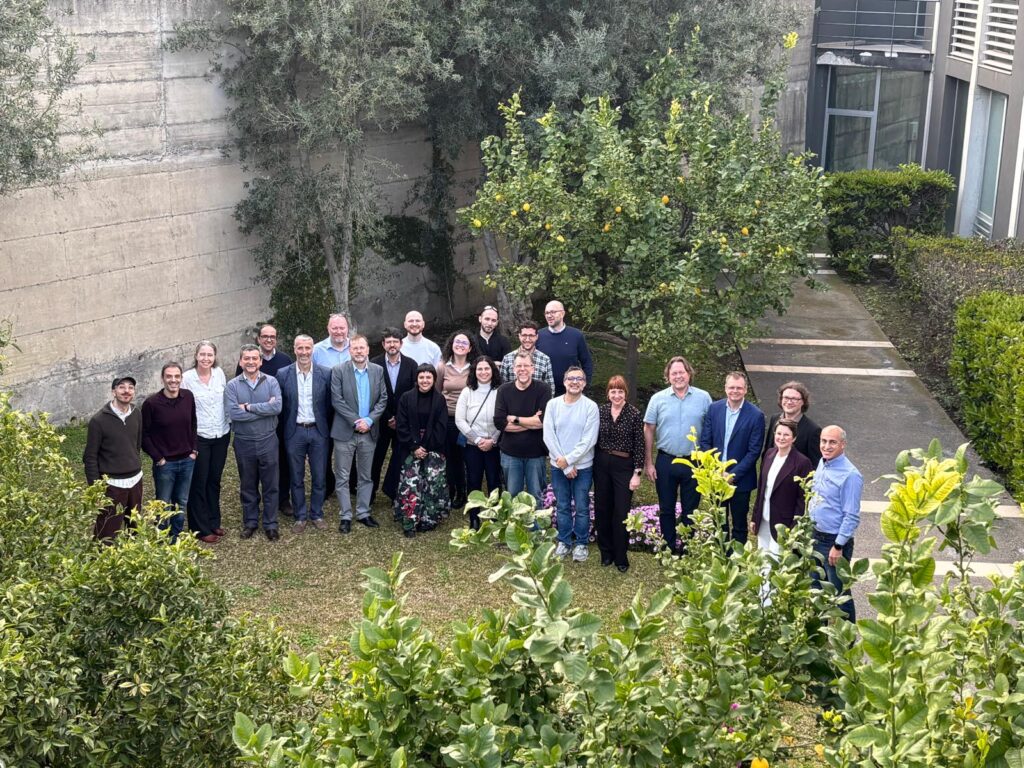
The project partners working to reduce underwater noise from ships, recently gathered in Catania, Italy, where they combined project discussions with a visit to a unique deep-sea monitoring site in the Mediterranean.
The two-day meeting, hosted by INFN – Laboratori Nazionali del Sud (LNS), brought together experts from across the consortium to review progress, exchange knowledge, and plan the next steps in the effort to reduce underwater radiated noise (URN) from ships.
As an added bonus, the consortium got to visit to the Capo Passero research site, where a Distributed Acoustic Sensing (DAS) station uses submarine fibre-optic cables to monitor underwater sound. The system turns the cables into thousands of virtual acoustic sensors, allowing researchers to detect vibrations and study the ocean soundscape across large distances.
Within the LowNoiser project, this technology helps researchers monitor underwater radiated noise (URN) from ships and collect new data on how maritime traffic affects the marine acoustic environment.
Understanding and reducing ship noise
While shipping is often recognised as one of the most energy-efficient modes of transport, vessels also generate underwater noise that can disrupt marine ecosystems. This continuous noise can interfere with marine animals’ ability to communicate, navigate, and locate food.
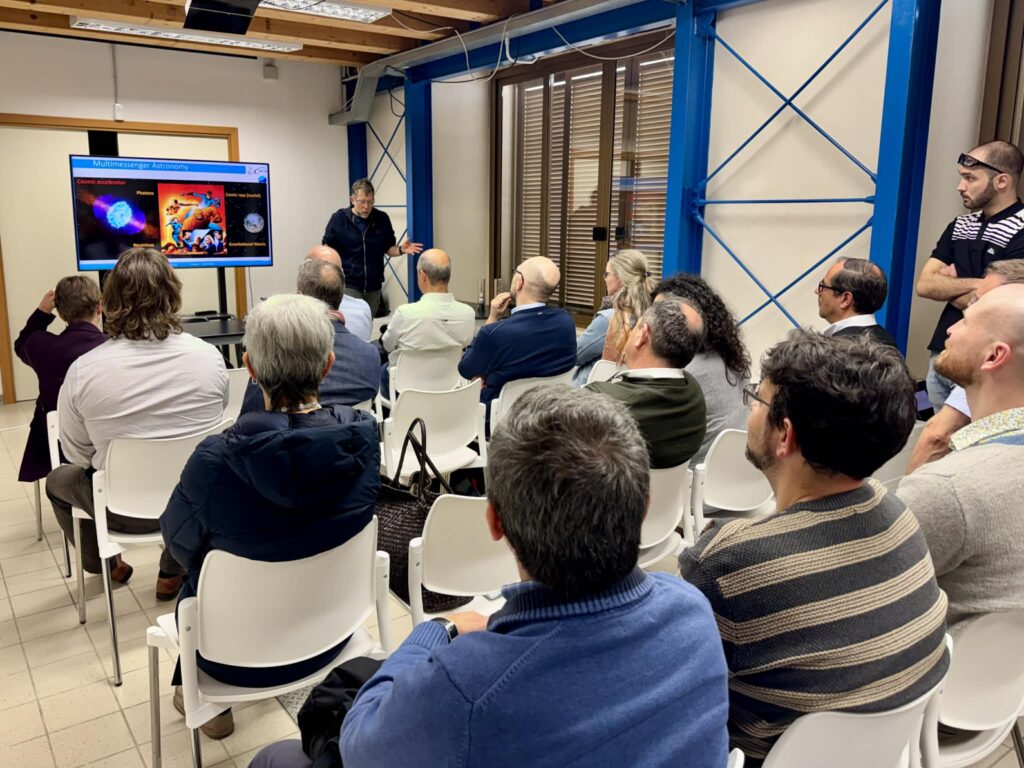
The LowNoiser project addresses this challenge by demonstrating practical technologies and operational solutions capable of reducing underwater radiated noise while maintaining vessel efficiency and performance.During the first day of the General Assembly, partners presented updates on ongoing work across the project. Discussions covered modelling approaches, experimental methods, and large-scale demonstrator activities aimed at understanding how noise is generated by ships and how it affects the marine environment.
Researchers within the consortium are studying several sources of vessel noise, including machinery vibrations, hydrodynamic effects, structural transmission, and propeller cavitation. By combining analytical modelling, numerical simulations, and experimental measurements, the project aims to improve the prediction and monitoring of underwater noise emissions.
These advances will support the development of quieter ship designs, retrofit solutions for existing vessels, and operational measures to reduce noise during ship operation.
Monitoring the underwater soundscape
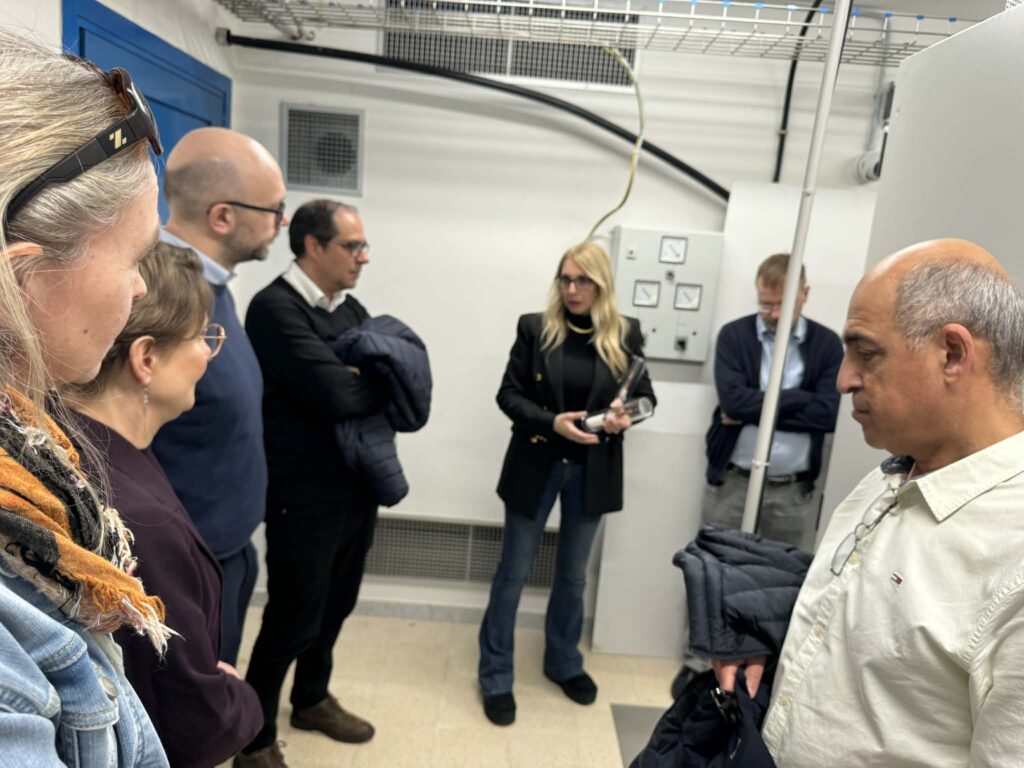
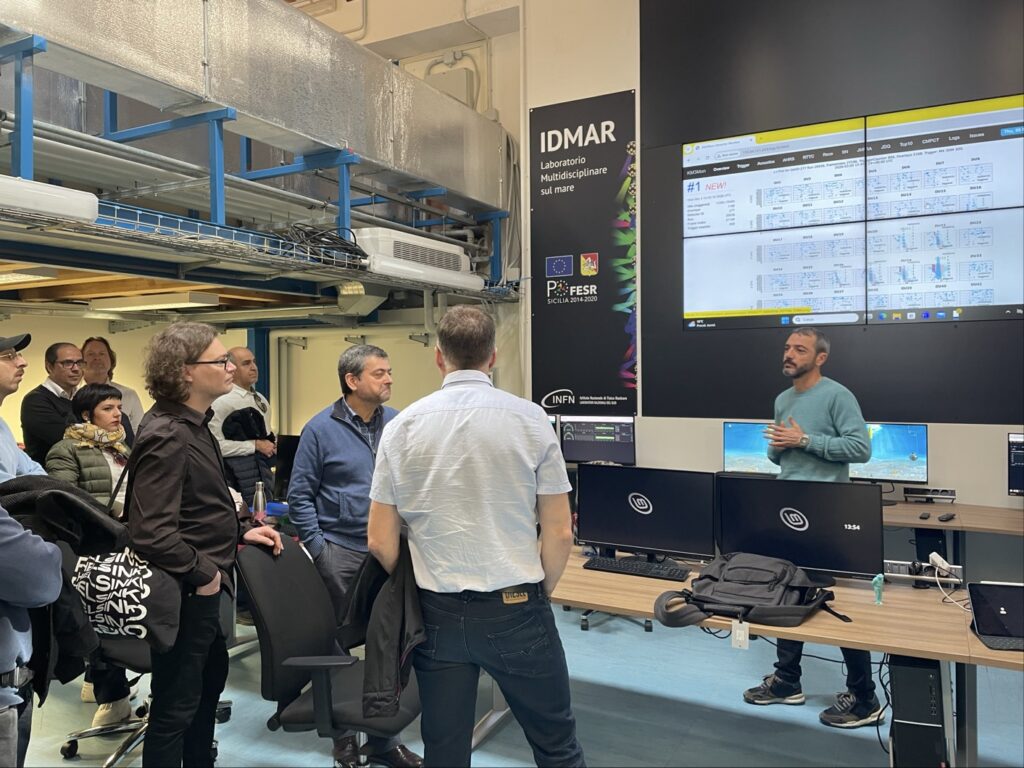
A key highlight of the meeting was the field visit to the Capo Passero deep-sea research site, where partners visited the Distributed Acoustic Sensing (DAS) station connected to submarine fibre-optic infrastructure used by the KM3NeT neutrino telescope.
DAS technology transforms fibre-optic cables into thousands of virtual acoustic sensors, enabling researchers to detect and analyse underwater vibrations across large distances. Within the LowNoiser project, this system provides a powerful tool for monitoring underwater radiated noise from ships and studying the ocean soundscape in real time.
The visit allowed partners to see firsthand how fibre-optic sensing can support long-term monitoring of underwater noise and help generate valuable data for both scientific research and maritime environmental management.

Strengthening collaboration across the consortium
Beyond technical discussions, the General Assembly provided an important opportunity for partners to strengthen collaboration and align activities across the project’s different work packages, highlighting one of the key strenghts of the project; the breadth and expertise of its consortium.
The consortium brings together partners from across Europe, including universities, research institutes, maritime technology providers, classification societies, and industry stakeholders. This wide range of expertise spanning maritime engineering, underwater acoustics, environmental science, and ship operations, ensuring that the solutions developed are both scientifically robust and practically applicable for the shipping industry.
Reflecting on the importance of this collaboration, Emilie Dorgeville, Project Coordinator of LowNoiser, highlighted the value of bringing together such a diverse range of expertise within the project.
“Bringing the consortium together is essential to connect the different pieces of the project — from advanced modelling and monitoring technologies to real-world demonstrations on vessels”, she said.
“We have partners covering the entire chain — from advanced modelling and measurement methods to laboratory experiments and real-world demonstrations. Bringing this knowledge together allows us not only to better understand underwater noise from ships, but also to develop practical solutions and provide guidance for future regulations.”
Moving towards quieter shipping
By combining modelling tools, experimental research, full-scale demonstrations, and environmental analysis, the LowNoiser project aims to provide the maritime sector with the knowledge and technologies needed to reduce underwater noise from shipping.
The results generated within the project will contribute to future guidelines, industry practices, and regulatory frameworks supporting quieter and more environmentally responsible maritime operations.