
At a recent European Maritime Safety Agency (EMSA) expert workshop, LOWNOISER brought practical project evidence into discussions on reducing underwater radiated noise from shipping. As the issue moves higher up the European and international maritime agenda, the project partners are combining modelling, monitoring and full-scale demonstrations to identify effective, practical noise-reduction measures.
The EU-funded project recently contributed to a European Maritime Safety Agency (EMSA) expert workshop on reducing underwater radiated noise from shipping. The closed forum brought together invited policymakers, maritime industry representatives, researchers and environmental specialists to discuss how policy objectives, available technologies and practical implementation can be brought closer together.
LOWNOISER contributed early modelling results from its industrial demonstrators and shared perspectives from across the project partnership. By bringing together technology providers, vessel-based demonstrations and research expertise, the project is examining both the potential of different measures and the conditions needed to implement them in practice.
From guidelines to implementation
The International Maritime Organization (IMO) has adopted revised guidelines for reducing underwater radiated noise from shipping, supported by an action plan to increase implementation. At European level, work is also progressing to improve noise assessment and identify effective mitigation measures.
Although the IMO guidelines remain voluntary, expectations are developing. Future policy measures, incentives and market demand could create stronger drivers for quieter vessels, making it increasingly important to understand which solutions work for different ship types, operating profiles and maritime regions.
For the LOWNOISER partners, the central challenge is therefore not only to identify promising measures, but to generate reliable evidence on performance, cost, installation and operational implications. This can help shipowners, designers and technology providers consider noise reduction earlier in newbuild, retrofit and operational decisions.
Testing solutions in real operations
A key message from the EMSA workshop was that there is no one-size-fits-all solution. Effective noise reduction is likely to require a combination of technical, operational and area-based measures adapted to vessel characteristics, operating conditions and the environmental sensitivity of different regions.
LOWNOISER is addressing this complexity through a shared programme of analytical modelling, monitoring and full-scale demonstrations. The project’s industrial and research partners are working across disciplines to compare solutions, understand trade-offs and strengthen methods for verifying noise-reduction performance.
The early results presented at the workshop also underlined the need to make information on performance, costs and implementation challenges more accessible. Evidence from the project’s demonstrators will help translate technical findings into knowledge that can support decisions across the maritime value chain.
“There is no one-size-fits-all solution. Effective noise reduction will require a combination of technical, operational and area-based measures tailored to different vessels and maritime regions. The industry needs reliable evidence to understand what works, what costs and how measures can be implemented in practice,” says Emilie Dorgeville, project coordinator of LOWNOISER.
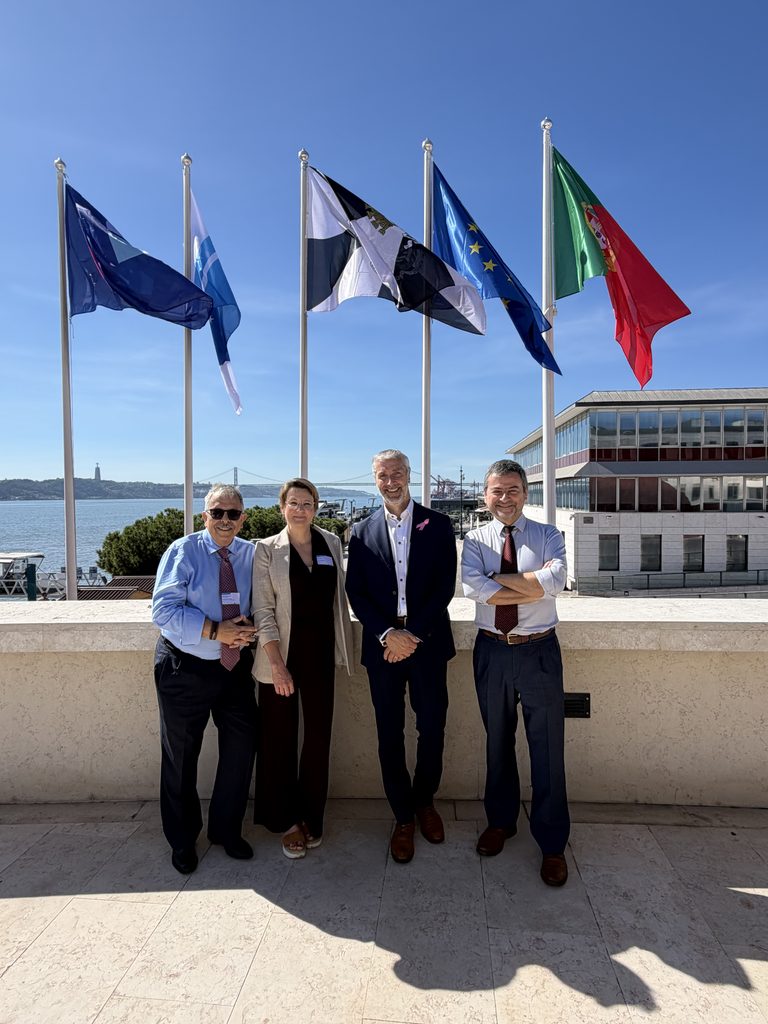
Alongside technical performance, the partners are investigating practical barriers such as operational constraints, installation requirements and reliable performance verification. Understanding these factors is essential if promising solutions are to move from analysis and trials towards wider use.
From project results to action
LOWNOISER’s contribution to the EMSA workshop reflects the project’s wider role: connecting research, technology development and full-scale industrial experience with the policy and market discussions that will shape future action on underwater noise.
By sharing results and implementation lessons as the work progresses, the project aims to give shipowners, technology providers, designers and authorities a stronger basis for evaluating measures and planning effective action.
The project will continue to develop and test solutions with its partners, helping ensure that future ambitions for quieter shipping are supported by credible data, practical experience and technically feasible pathways to implementation.